Provenance research

Every building
has a biography.
We recover it.

Evidence-based heritage studies that reconstruct the biography of a place through archival research, tracing ownership, architecture and the lives that shaped it across generations.

The biographical method

Archives preserve fragments of a place's life

A deed records a transfer. A parish register records a family. A newspaper captures a moment. A municipal drawing records a change. Individually they are documents. Together, placed within their architectural, social and historical context, they become the documented biography of a building.

Cartouche Heritage reconstructs that biography through archival research, connecting ownership, architecture, commerce and the lives that shaped a place across generations. Every conclusion remains grounded in documentary evidence, and every statement can be traced back to its source.

Louise Linde, FRSA

The Biographical Method grew from my earlier work as a theatre director and was refined during a decade at Stockholm Cathedral, especially documenting the major restoration of the cathedral. I followed the restoration as the exterior was returned to its documented 1743 appearance, restoring its historic colour, stonework and architectural ornamentation. The great spire was lifted and stabilised while specialist craftsmen addressed the challenge of sourcing timber of dimensions rarely available today.

Working alongside conservators, architects, craftsmen and archival researchers shaped the method I use today. A theatre director reconstructs lives through their historical, architectural and social world. The same principle guides every heritage study. Archives preserve fragments. Historical context reconnects them. Together they reveal the documented biography of a place.

How a report is built

Four stages, one document

The method stays the same wherever the property stands, only the archive changes.

Discover

Discover the evidence

Every surviving trace is gathered. Property registers, parish records, municipal archives, historic maps, trade directories, newspapers and architectural plans each preserve part of the story.

Reconstruct

Reconstruct the biography

Ownership, architecture, commerce and everyday life are connected into a continuous historical narrative, revealing how the place evolved through time.

Context

Place it in history

The property is understood within the wider life of its street, neighbourhood, city and historical moment. Individual facts become part of a larger historical landscape.

The study

The heritage study

The result is a fully documented biography of the place, written from evidence, fully source-cited and prepared for owners, collectors and institutions.

The lives behind the archives

What the archives reveal

Each property is traced through primary sources.

  • Land registryThe changing life of a property through ownership and inheritance.
  • Notarial deedsSales, inheritance and legal transfer.
  • Parish recordsBirths, marriages, deaths and the families who shaped the house.
  • Trade directoriesThe businesses at the address.
  • Municipal building recordsPlans, licences and alterations.
Proof of method

Read the work

Case study, Porto

Rua das Flores, 159

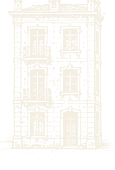
A bourgeois townhouse on Porto's historic commercial street, researched from municipal archive, 19th-century trade directories, and parish record.

Request the full report
"The façade alterations of the 1880s coincide with the recorded transfer of the ground-floor lease to a textile merchant family..."
Commissioning a report

Pricing

Base pricing reflects Porto archive access. Cost and timeline adjust by market, ask for a quote specific to your property's location.

The story of the place

Heritage Biography

From €800 – €1,200
  • The full biography of the place, origin, trade, wealth, shadow, and the unrecorded
  • Drawn from published civic and architectural history
  • Bilingual delivery on request
  • 2–3 week turnaround
Bespoke

Bespoke Research

Custom quote
  • Estates, contested histories, or research spanning multiple archives or countries
  • Scoped after an initial archive assessment